Tag Archives: Toxic Mom Toolkit

Misery Defined: Toxic Mom Toolkit’s Top Five Tips for Surviving Seeing Your Mother after 20 Years of No Contact

19 Sep

If you are planning an oft-delayed trip to see your mother after a long no contact period, remember – it’s never what you worry about.

If you have had little or no contact with your Toxic Mother for five, ten, fifteen or twenty years, keep it simple. Just expect to be surprised.

Are you the same person you were last time you saw your mother? Probably not. So, expect your mom to be changed in some ways too. She may still be an irrational hater, an under-miner, a conspirator focused on annoying or hurting you, but her skills will have become rusty without you around to practice on.  In fact, she may no longer be able to upset you as she has in the past.

What would happen if you arrived at this dreaded meeting a whole, calm, optimistic and ready-to-laugh adult? What if this time she didn’t see the child-based fear in your eyes? What if at the first hint of old hurtful patterns you said to her, “You know what? I’ve got other things I’d rather do than go over ancient history” and you left her there with her mouth open to enjoy a matinée movie instead? So what if you flew two thousand miles to see your mother one last time and when she turned impossible you switched gears and turned the vacation into an antiquing trip instead?

Would anyone really blame you?

Here are my Top Five Tips for surviving a long-delayed Toxic Mom visit:

  1. Bring or enlist an old friend to be at your side. Toxic Mother’s hate outsiders, also known as “witnesses.”
  2. Plan to do something your mother loves even if you loathe it. Then pat yourself on the back and reward yourself with a massage, or some other treat, when you get home.
  3. Have a short list of other people or places nearby to visit.
  4. Have a short list of pleasant activities to transition to should you need to cut your visit short.
  5. Plan all mother/daughter meetings and activities in public spaces. Cops swear by it.

I hope this is helpful to you. If you have a specific challenge feel free to post questions at Toxic Mom Toolkit on Facebook. But please post carefully on this “open” forum. If you don’t want everyone knowing your TM business feel free to create an alter persona or e-mail me directly at newsyrayne@gmail.com. I answer every email.

TOXIC MOM TOOLKIT SYNONYM FOR LOVE: BACON

22 Jul

I was sitting on a café patio with a good friend. We were enjoying iced teas on a hot day. This friend has been super supportive of my Toxic Mom Toolkit work and has had periods in her life when she felt her own mom was toxic.

The good news for my friend is that lately she has been able to enjoy time with her mother. That has happened because my friend set up some boundaries and has learned to say “No” to her mother. She’s been amazed at how quickly her mother has adjusted to her wishes. She’s very grateful that there are nice telephone conversations and pleasant outings now with her mom.

As I was listening to my friend the best analogy for this lack of true love feeling so many daughters of toxic moms experience, which can include feelings of confusion, yearning, and pain – suddenly, hit me.

It’s like this:

You are invited to a famous fancy country club. They have all these signature dishes and drinks. Let’s say, this club invented the Bloody Mary cocktail. So, you’re thinking everything I order here is going to be fantastic: over the top.  Sort of like mother’s love, which is unconditional and all encompassing.

You take your seat at a table overlooking a sweeping bright green lawn. The birds are chirping softly. Silverware being used at other tables creates a soft sonata of happy clinks. You decide to order the famous club sandwich and the Bloody Mary. You envision perfectly toasted thin sliced bread with lettuce, turkey, bacon and just the right slather of freshly made lemon mayonnaise. Your order arrives on a gleaming gold-rimmed plate and a chilled glass placed beside it. As you adjust your napkin under your chin you notice there’s not really a lot of bacon.

Wait a minute. There’s NO bacon.

You look up and check other diner’s dishes and you see other people with the club sandwich have so much perfectly crispy bacon on their sandwiches that they are breaking off long pieces and using the stiff slices to stir their Bloody Mary’s! What is in your Bloody Mary glass? A used popsicle stick.

You politely call the waiter over and point out that the kitchen forgot your bacon. And you need a proper Bloody Mary, please. He smiles and informs you that there was no mistake. YOU don’t get bacon on your sandwich.YOU don’t get a bacon swizzle stick for your Bloody Mary.

“Get it? A Toxic Mom that withholds love or is cruel or whatever is like a club sandwich without bacon. It’s a total gyp,” I said to my friend. “And it doesn’t happen to everyone once in his or her life. But it happens to you every time you order it. Especially if you’re dying for it. Every time you seek love, approval, support, understanding, kindness from your Toxic Mom…”

“You get a club sandwich with no bacon!” my friend chimed in as we both slapped our hands down on the table top.

We laughed about bacon as a synonym for love and throughout the rest of our conversation when talking about hurtful things that her mother had done, we would pause and both say, “No bacon” and we understood each other exactly.

If you want and deserve yummy, savory, bacon/love and know you’ll never get bacon/love from your Toxic Mom why do you keep ordering it? Why do you keep paying for it? Why do you keep walking away feeling totally gypped?

How many times would you go back to that country club and order the club sandwich with the hope  you’ll get bacon before you try another restaurant and actually get bacon?

Yes, it won’t be the FANCY restaurant bacon, but there is wonderful, lovely, bacon elsewhere. There is bacon everywhere else. You can go out into the world and get all the bacon you deserve.

Toxic Mom Toolkit: Thoughts While Editing – Time is Short

27 Jun

I always wanted to write a book. In grade school I carried around small leather-bound classics hoping I’d impress my teachers and schoolmates. I wanted them to think that I understood Dickens and Twain when I was EIGHT.

I could always imagine my name on a best-seller list. But for writing what?

It was brave of me to leave my newspaper job to write this book. As I dedicated myself to the writing effort, blogging about it and building an online community, I learned to truly trust my husband, the universe, and myself. It was one of the most difficult and ultimately rewarding journeys of my adult life.

Accepting that I was simply doing what was right for me was a huge leap of faith. At each transition the next step rose up to meet me. Choosing to forget about what others thought was crucial for me. It was very hard.

Of course, I had doubts all the way through. I remember wondering what former colleagues and co-workers thought. To some, I was weird enough to begin with. Were they poking fun at my efforts? Was I too obsessed with my childhood? Was I propping myself as an expert on a non-topic? Was I inventing a passion to have something to do? The chatter raged in my brain. But eventually, it died down allowing space for quiet contemplation.

I remembered, time is so short.

I travelled back in time and studied my life, the life of my parents and relations and I wrote it all down.  I remembered how I earned my courage. I was ready to tell readers about it.

That I signed up with 8WomenDream.com and wrote my little heart out on the topic of toxic moms for an entire year is pretty astounding to me now. I found my focus early on and I trusted that readers got it. At Toxic Mom Toolkit on Facebook we grew from the 30 or so “likes” I needed to start my stats to nearly 60,000 people reached around the world each month.

As I got to know my followers in the U.S., Australia, Japan, the Middle East and Europe, I began to think of my book as a wonderful life form that needed me as its midwife. On days when it was too hard I worked anyway on blind faith. If I had to tell myself I could have chocolate after writing a chapter, that was okay. I’m sure plenty of surgeons imagine cocktails or golf or other rewards waiting for them when the nurses take over the suturing.

As I racked up chapters, I taught myself to embrace the work joyfully even if I’d rather be doing anything else.

The very last bits included stories of sexual abuse. Feeling sickened I stalled and stalled and stalled, not wanting to welcome my own abuser back into my head. I was cranky and tired and a pain to live with. An emotional war raged in my head. I dreaded and resented having to revisit these events, yet I had to. I had kicked these stories out of my head long ago and even a brief visit made me dizzy with sadness.

My husband complained about my attitude.

“I’m walking around with my abuser in my head right now so you’ll just have to forgive me,” I told him.

“Don’t think about it,” he suggested.

“The problem is, I can’t kick him out again until I write the whole story and I can’t decide how much of the story I can live with out in the world. How much? How much? How deep? It’s a struggle,” I replied.

Our eyes met. Enough said.

I married a man who expects great things from me. Sometimes I can do things to impress him that I can’t do for myself. That I finished this book is in great part due to his complete faith that I would.

As I edit and shape and clean up I’m realizing that his book taught me to value my dreams, make room for them, and commit time and energy to them without apologies. Time is so short.

TOXIC MOM TOOLKIT FOLLOWERS GATHER NEWS ARTICLES YOU CAN USE

20 Jun

One of the best things about Toxic Mom Toolkit on Facebook is the global reach and depth. Women all over the world are checking in, offering wisdom and support and forwarding interesting and helpful articles – like this:

“Narcissistic Perverts: The Most Intelligent People are the Most Exposed.”

This is an interview with the author of the book: “THE MALADY OF THE CENTURY: To Understand and to Fight Manipulation.”

In your manuscript, you analyze the relationship where you have a grip on someone, the real “getting one’s mitts on their spirit,” according to the psycho-analyst Saverio Tomasella, that allows someone to take power over someone else. What does this consist of?

We can only define this with one word: “de-braining.” The process of de-braining consists in the progressive loss of the psychological capacities of a person submitted to daily manipulation that acts as micro-aggressions. The poison is instilled at homoeopathic doses.

The manipulated person becomes little by little unable to make a difference between what is good or bad for him, and is not conscious of this “de-braining.” Incapable of discerning, robbed of his analysing capacities, his critical spirit and his free arbitration capacities, he will obey the orders of the manipulator without resisting. This is where the passivity comes from that characterises a subjected person. The relationship where one holds a grip on another has not been analysed very well yet. Therefore this gives the wrong impression and a number of perceived ideas that are wrong.

Why do we think that manipulated people are “weak”?

Indeed, they are not. It is often the most intelligent people, the most brilliant ones that paradoxically are the most sensitive or the most exposed to manipulation techniques.  Philippe Breton, one of France’s best specialists in the spoken word and communication, explains this in his book: “The Manipulated Word.” This book received the award for Moral Philosophy from the Academy of Moral Sciences and Politics in 1998. What you have to understand is that manipulation installs a relationship ‘grip’ that is totally asymmetrical, the more that it is a long-term project. There is absolutely no equality between the manipulator and his victim. In the most ferocious version, it talks about a predator whose intention is totally eluded by the majority of the analysts who study these questions.

But today we start to better recognize the process thanks to the work of certain neuropsychiatrists like Dr. Muriel Salmona, president of the Association of Traumatic Memory and Victimology. It describes how the mechanism of disconnection works with a traumatized person. The same happens as with someone who is submitted to repetitive psychological aggression. What works in this case is not the intensity of the traumatic experience but the repetivity. What this research teaches us coincides with the notion of “de-braining,” which has been described by psycho-analyst Paul-Claude Racamier, who discovered a number of concepts and neologisms amongst others the one of narcissistic perversion. We now know how the neurocircuit of auto-inhibition functions in a manipulated person. This auto-inhibition translates itself by a phenomenal auto-destruction of which the psychological consequences can be very grave. The de-braining only represents a phase before the devitalisation, of which the effects will be reflected in the mental and physical health of the manipulated.

How will the multi disciplinary approach favour a better comprehension of this?

I think that to go even further in the knowledge of these problems, it is necessary to establish that which the sociologist Edgar Moring calls the inter-disciplinary “reliance.”

This consists of regrouping the knowledge of different disciplines such as psycho-analysis, psychology of communication, neuroscience, anthropology, sociology… that all study the mechanisms of manipulation, the ‘grip’ relation and the consequences for the last ones on the individual.

In short, this field of investigation needs to be cleared, especially since more recent discoveries have been made in the field of molecular biology and genetics that support this thesis of “stressing agents” as certain manipulations that deteriorate our genes and make them “mute.”

You describe that “the manipulation deteriorates profoundly the personality of the manipulated”. What does this deterioration consist of?

Because of the “de-braining” the manipulator can “imprint” his way of thinking with the manipulated person exactly like you can engrave a new file on a virgin CD disk. These new behaviours will then appear and these “trans-acting agents” as Paul-Claude Racamier calls them, will act as a no-return stop sign in the evolution of the manipulated person. According to the theory of engagement borrowed by psycho-sociology, the individual will re-adjust its thinking system to cohere with its actions. This psychological re-organisation provokes a cognitive dissonance with the manipulated person and thus finds himself in loyalty conflict between what the manipulation “imposes” him to do and the moral values that these new behaviours transgress.

However the loyalty conflict is, according to Ariane Bilheran, clinical psychologist and author of many works on the subject of psychological violence, the most fundamental operating mode of torture. However, so that the manipulated cannot get back his psychological capacities, the state of mental confusion has to be carefully maintained.

One of the best ways to succeed in this resides in the use of the paradoxical speech (aka: word salad or schizophasia) that I will cite: “Do as I say, but not as I do, and most of all do not understand a word of what I tell you in a way that, whatever you think, whatever you say or whatever you do, I will always be right.”  This type of communication, that tends to pit one against the other in the different aspects of the personality of the manipulated, and generates loyalty conflicts and is “schizophrenic.” To say it more simple, this kind of communication makes you “crazy.”

 * translated from French by Nadine V.

If you would like to submit an article that helped you to better cope with your toxic mother, please email it to me, Rayne Wolfe, at newsyrayne@gmail.com or post a link at Toxic Mom Toolkit on Facebook.

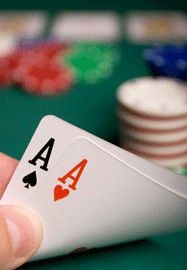
TOXIC MOM TOOLKIT: WHEN FOUR ACES IS A LOSING HAND

1 Jun

If you follow my Toxic Mom Toolkit Facebook page you know that I have finished the first draft of my book and that I’m editing chapters. I was thinking how valuable this chapter is and thought I’d put it up here. I hope this is helpful to you.

 TOXIC MOM TOOLKIT:

        ACES – Adverse Childhood Experiences


I’m not a scientist, nor will I ever play one on T.V.

In fact, I am SO not a scientist for many reasons including extreme medical squeamishness and an empty folder in my brain where my multiplication tables should reside. But I’ve long thought I should have some scientific perspective to help illuminate the fallout from toxic mothering or some really smart analysis of how children are negatively affected.

How do people sort out how much their toxic mothers negatively affect their adult lives?

Ask the universe and it will come to you.

I met a new friend for coffee. This man happens to be a saintly sort, the director of a very interesting and progressive homeless shelter in the town where I live. A former attorney, he comes across as part professor, part priest, all compassionate caring. Which, couldn’t be more different than my first impression of “looks good on the outside” but “emotionally limping” on the inside.

I decided not to hold his brains and confidence against him. Maybe I could learn something.

He’s the one that introduced me to the exact information I sought in the form of a Kaiser Hospital study in which patients were asked a series of questions for a project that focused on Adverse Childhood Experiences, or ACES.

In a nutshell, the study focuses on how the number of ACES one experiences in youth can be a point of calibration to predict emotional problems that could be serious in adulthood. My friend values the study as a way to look at the causes of homelessness, which is often the result of emotional turmoil or hopelessness. Sessions for homeless clients that utilize this measuring tool are taking place at my local shelter and the feedback has been positive.

I, on the other hand, immediately valued the scientific study of taking a person’s life story and pulling out the ACES as a way of exploring what daughters of toxic mother’s experience. I like that by clicking off a page of questions a person could really see objectively that damage was indeed inflicted.

I ran straight home and found the study online and the questionnaire and found that I scored 5 on this test. I knew from my coffee chat that anything over a four ACES was considered the tipping point for bad things including a high risk for becoming homeless.

You can find even more information about this study at: http://www.seclinicatcots.org/page12/page12.html

ACES QUESTIONAIRE

Prior to your 18th birthday:

1. Did a parent or other adult in the household often or very often

Swear at you, insult you, put you down, or humiliate you?

                                    or

Act in a way that made you afraid that you might be physically hurt?

Yes   No

If yes enter 1     ________

2. Did a parent or other adult in the household often or very often

Push, grab, slap, or throw something at you?

                                    or

Ever hit you so hard that you had marks or were injured?

Yes   No

If yes enter 1     ________

3. Did an adult or person at least 5 years older than you ever

Touch or fondle you or have you touch their body in a sexual way?

                                    or

Attempt or actually have oral, anal, or vaginal intercourse with you?

Yes   No

If yes enter 1     ________

4. Did you often or very often feel that …

No one in your family loved you or thought you were important or special?

                                    or

Your family didn’t look out for each other, feel close to each other, or support each other?

Yes   No

If yes enter 1     ________

5. Did you often or very often feel that …

You didn’t have enough to eat, had to wear dirty clothes, and had no one to protect you?

                                    or

Your parents were too drunk or high to take care of you or take you to the doctor if you needed it?

Yes   No

If yes enter 1     ________

6. Was a biological parent ever lost to you through divorced, abandonment, or other reason ?

Yes   No

If yes enter 1     ________


7. Was your mother or stepmother:
            Often or very often pushed, grabbed, slapped, or had something thrown at her?

or

Sometimes, often, or very often kicked, bitten, hit with a fist, or hit with something hard?

                                    or

Ever repeatedly hit over at least a few minutes or threatened with a gun or knife?

Yes   No

If yes enter 1     ________

8. Did you live with anyone who was a problem drinker or alcoholic or who used street drugs?

Yes   No

If yes enter 1     ________

9. Was a household member depressed or mentally ill or did a household member attempt suicide?

Yes   No

If yes enter 1     ________

10. Did a household member go to prison?

Yes   No

If yes enter 1     ________

             Now add up your “Yes” answers:   _______   This is your ACE Score

Someone who scored an 8 on this quiz filled out one of my questionnaires. Her story is included in my book Toxic Mom Toolkit.

Toxic Mom Toolkit – Mending Hearts – Community Volunteering

11 Apr

May I share with you my syllabus for volunteering in the community?

I’m planning to visit my local childrens’ home with Toxic Mom Toolkit friends to teach sewing & mending to children the week before Mother’s Day. It’s one way to put a positive spin on how we are feeling around Mother’s Day; by hosting a fun learning activity for kids who may be missing their own mothers very much.


Mending Hearts Syllabus 

Today’s Project:

Learning to mend by sewing small hearts as keepsakes, decorations or presents. This tiny tokens can become gifts for their mothers, grandmothers, aunts, sisters or other loving women in their lives on Mother’s Day.

 Definition of mending:

 To restore something

to a satisfactory state.

Mending is never perfect, but it is what we do when we care about something and don’t want to throw it away.

We can mend torn clothes and we can mend friendships and relationships.

The only thing required is a willingness to do so and patience.

* * *

Materials: Pre-cut red felt hearts, material hearts, embroidery thread, stuffing, buttons, red pipe cleaners for hooks, and large embroidery needles.

Examples: Can include several finished hearts in different sizes and materials, vintage linens and books on embroidery for inspiration.

* * *

Forgiveness is the needle that knows how to mend.

 – Jewell

E-Publishing Loves Daughter Memoirs

25 Mar

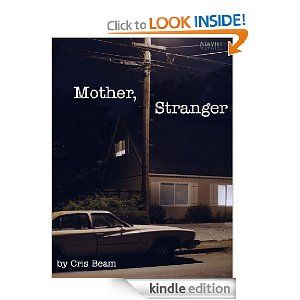
I just finished reading Cris Beam’s short memoir Mother/Stranger about growing up with a mother so mentally ill that she told her family that her daughter was dead, when, in fact, she had just moved away for her own safety.

Beam is a creative writing professor at Columbia University who also wrote Transparent, a nonfiction book that covers seven years in the lives of four transgender teenagers, which won the Lambda Literary Award in 2008.

Mother/Stranger is one of several very short memoirs I’ve recently downloaded as Kindle reader editions. These books can run from free to 99-cents and are often less than $10. There are a ton of new biographies and memoirs written by first effort authors who have struggled with toxic mothers.

One of my other favorites is by June Cross entitled Secret Daughter: A Mixed Race Daughter and the Mother who gave her away.  When her white aspiring actress mother has a love affair with a black comedian, she first intends to keep her baby – – if it can pass for white.

But this was the 1950’s and soon, June Cross is placed with a loving black couple living in Atlantic City. Her story of bouncing back and forth between the east coast where education and hard work are valued to summers in Hollywood where all that matters is the next fun party is fascinating particularly because she loves her mother and the “Aunt” who raised her, but struggles with literally being a secret.

Cross graduates from an Ivy League school and eventually becomes a producer for the television news show Frontline. It is in telling her own story of creating a documentary about her unique experiences that she shines.

I always say that you shouldn’t be afraid of your own story and that if you have to go out and interview relatives – do it! Cross shows us how to conduct an interview, when she finally asks her own mother all of the questions that have tortured her for her entire life. I was on the edge of my seat.

I asked for a Kindle reader this Christmas and received a Kindle Fire. Having had a library card since I was six-years-old and being the type of person who visits my local branch twice a week at least, I thought I’d mainly use it to download big, long, challenging reads. But what I’ve discovered is that e-publishing is making available so many little books written by real people and at such a low-cost, instantly via Amazon.com and other providers, that I’m reading like a maniac.

These earnest little books that can be read in one setting are often less than 100 pages and feel like meeting someone on a plane or a bus. We have a tendency to tell strangers so much more than we would ever tell our own social circle, don’t we?  These books feel like a whispered conversation. Almost like we’ve found an abandoned diary and are turning pages quickly for fear its owner will return and snatch it from our hands.

The other great thing about Kindle reading is that you can highlight lines and create a treasure trove of nuggets. I was highlighting a lot of Beam’s book Mother/Stranger. For example:

“I remembered the way my mother had told her family that I was dead and wondered if they ever believed it. I thought how strange it was to be a ghost: solid enough for everyone’s projections to land and stick but too ephemeral to fight back.”

Beam has great insights into what a child must suffer through having a mother with mental illness. She also reserves great sympathy for her mother.

“After therapy or years of a safe and protected life, a person can suddenly give language to what was once only a sensory terror. That’s what happened with my mom.”

She also has a great way of looking at the big picture, at one point writing that “estrangement runs in our family.”

Whether you use a library card, a laptop, or a Kindle reader be sure to explore these new memoirs that might help you to better understand your own experience. Check out the online book descriptions and be sure to skip down to the reader reviews that often refer to additional books.

Have you read a good memoir lately? Please tell us about it in the comments section below

Happy Reading!

Toxic Mom Toolkit: You Can Laugh or You Can Cry

24 Mar

As part of the Toxic Mom Toolkit Journal Project the next question is:

When you were little what did you think was the funniest thing? What made you laugh until your stomach hurt?

My dad, the beatnik printer, used to always say with a gleam in his eye,

“You can laugh or you can cry.”

When I would take a hard fall on skates and run to him weeping and showing off a fresh scrape he had this act, this routine, that would always leave me dissolved in giggles.

“You FELL? Where? Show me where you’re hurt!” he’d say breathlessly.

He’d scan my arms and legs with his huge hands, squeezing and waving my little limbs, asking me if this or that was broken; could I still feel it?  After he determined that I wasn’t actually broken he’d demand that I take him back outside to the sidewalk in front of our house and show him the precise, exact inch of sidewalk where I landed. He was worried that if I hit it that hard I might have left a crack and the Crack Police would come and write him a ticket – which cost money.

We’d get down on our hands and knees and touching the concrete with our fingers, feel around for fissures.

My dad would point to a little normal city street crack and demand to know if I had broken the sidewalk, right there.  Maybe we could ‘pin it’ on the little neighbor kid down the block.

“His dad’s a car mechanic. He can afford to pay the Crack Police fines. Not me! Not this week!” my dad would exclaim dramatically.

The routine went on and on until our giggles attracted a little knot of neighborhood kids to help us study the cracks in the sidewalk in front of our house. My father wasn’t worried about little hairline cracks, but big divots that collected dirt and allowed weeds to grow – that would be trouble.

My father had a knack for turning childhood upsets into funny adventures. When the gold fish died we held a New Orleans funeral for it, opening umbrellas in the house and parading down the hall behind him holding the fish bowl up high then pouring it dramatically into a flushing toilet. Then we’d all applaud poor dead Leon on his way to Ocean Heaven.

My dad and I wondered aloud what flowers said to each other and why birds liked to steal penny nails. We gave inanimate objects names in order to talk about them more. We talked and giggled and used our imaginations. Kids cry. But when my dad was involved, tears quickly turned into laughter.  We learned that bad things happen, but if you let the bad go, it’s natural to find something funny about it. Laughing is a choice, a habit. It’s a gift from my father for which I am eternally grateful.

When you were little what did you think was the funniest thing? What made you laugh until your stomach hurt?

Toxic Mom Toolkit Journal Project: Who Called the Police?

10 Mar

Most kids fantasize about the day someone finally punishes their parents for all the hurts, slights and times they had to eat their vegetables. But daughters of toxic moms can experience a life long struggle with the idea that perhaps someone should have called the authorities about a terrible home life, neglect or abuse.

So take a deep breath and transport yourself back to that time when your mom was at her worst. She is grabbing the wooden spoon and you are bracing yourself when – WAIT! There’s a sharp series of knocks at the door.

Imagine opening that door and seeing a special police force created solely to bust Toxic Moms. What would the police  say to your mom and what would she say back?

With your child’s eyes survey your childhood home. What would the police notice and question?  Would your mother confess or be defiant?  Would she try to escape? If she were arrested and led off in handcuffs what would be the last thing she would say to you as she was led away? What would you say back, knowing that the police would protect you?

This journal assignment is sort of like writing a small play. The great thing about creating a play is you can choose your characters, move them around and make them say or do anything you want. So what do you want to cover? What do you need to explore? What history needs to be rewritten by the adult you?

Don’t be afraid. It’s just pencil on paper you can erase or toss. But you just might discover that in reenacting and controlling the scene and dialog you are freeing yourself from old ghosts.  Or at least I hope so.

Toxic Mom Toolkit Journal Project

2 Mar

In honor of what would have been Dr. Seuss’s 108th birthday, today’s Toxic Mom Toolkit Journal Question is:

Q: At the very hardest time dealing with your toxic mom, what book saved you?

I think I became a writer simply because I loved to read. I developed a love of reading because I was alone much of the time, unsupervised. When I was small I used to carry very grown up leather bound books around to impress adults. I probably only impressed them as far too precocious. I spent many evenings on my tummy on the floor with my chin in my hands devouring the Wizard of Oz books, Heidi books and Betty & Veronica comic books.

Reading taught me that people’s lives are stories.

When I understood that, I started listening more closely, paying attention and taking mental notes.

I was the child who lived for eavesdropping. I became an adult apartment dweller who kept an empty water glass handy – just in case I heard neighbors fighting. I wanted to know why people did the things they did. I suspected that the way I was raised was not right and I relished observing others acting out their daily lives.

I wrote stories about the widow and the tomcat, my dashing motorcycle mechanic, the way people behaved under pressure or in the throes of love. I took writing classes and read like a convict on death row. I became a self taught writer and journalist.

I read adult books too early. I discovered children’s’ books too late. I have repeatedly been saved by the right book at the right time including, Gifts from the Sea by Anne Morrow Lindbergh and 52 McGs, a collection of the best obituaries from legendary New York Times writer Robert McG. Thomas, Jr.

Hands down the book that saved me more than once is To Kill a Mockingbird by Harper Lee. It showed me that the first job of a parent is to want what is best for their children. This is my favorite scene from the movie:

http://www.youtube.com/watch?v=q7CX_5D6y6E&feature=relmfu

Growing up with a toxic mom sometimes it’s hard to know what is normal, what is better, or what is worse. Biographies, memoirs and fiction focused on survivors have not only inspired me but also saved me from feeling too sorry for myself. They taught me that I could write my own life story.

What book saved you?