Tag Archives: Toxic Mom Toolkit on Facebook

Toxic Mom Toolkit: Thoughts While Editing – Time is Short

27 Jun

I always wanted to write a book. In grade school I carried around small leather-bound classics hoping I’d impress my teachers and schoolmates. I wanted them to think that I understood Dickens and Twain when I was EIGHT.

I could always imagine my name on a best-seller list. But for writing what?

It was brave of me to leave my newspaper job to write this book. As I dedicated myself to the writing effort, blogging about it and building an online community, I learned to truly trust my husband, the universe, and myself. It was one of the most difficult and ultimately rewarding journeys of my adult life.

Accepting that I was simply doing what was right for me was a huge leap of faith. At each transition the next step rose up to meet me. Choosing to forget about what others thought was crucial for me. It was very hard.

Of course, I had doubts all the way through. I remember wondering what former colleagues and co-workers thought. To some, I was weird enough to begin with. Were they poking fun at my efforts? Was I too obsessed with my childhood? Was I propping myself as an expert on a non-topic? Was I inventing a passion to have something to do? The chatter raged in my brain. But eventually, it died down allowing space for quiet contemplation.

I remembered, time is so short.

I travelled back in time and studied my life, the life of my parents and relations and I wrote it all down.  I remembered how I earned my courage. I was ready to tell readers about it.

That I signed up with 8WomenDream.com and wrote my little heart out on the topic of toxic moms for an entire year is pretty astounding to me now. I found my focus early on and I trusted that readers got it. At Toxic Mom Toolkit on Facebook we grew from the 30 or so “likes” I needed to start my stats to nearly 60,000 people reached around the world each month.

As I got to know my followers in the U.S., Australia, Japan, the Middle East and Europe, I began to think of my book as a wonderful life form that needed me as its midwife. On days when it was too hard I worked anyway on blind faith. If I had to tell myself I could have chocolate after writing a chapter, that was okay. I’m sure plenty of surgeons imagine cocktails or golf or other rewards waiting for them when the nurses take over the suturing.

As I racked up chapters, I taught myself to embrace the work joyfully even if I’d rather be doing anything else.

The very last bits included stories of sexual abuse. Feeling sickened I stalled and stalled and stalled, not wanting to welcome my own abuser back into my head. I was cranky and tired and a pain to live with. An emotional war raged in my head. I dreaded and resented having to revisit these events, yet I had to. I had kicked these stories out of my head long ago and even a brief visit made me dizzy with sadness.

My husband complained about my attitude.

“I’m walking around with my abuser in my head right now so you’ll just have to forgive me,” I told him.

“Don’t think about it,” he suggested.

“The problem is, I can’t kick him out again until I write the whole story and I can’t decide how much of the story I can live with out in the world. How much? How much? How deep? It’s a struggle,” I replied.

Our eyes met. Enough said.

I married a man who expects great things from me. Sometimes I can do things to impress him that I can’t do for myself. That I finished this book is in great part due to his complete faith that I would.

As I edit and shape and clean up I’m realizing that his book taught me to value my dreams, make room for them, and commit time and energy to them without apologies. Time is so short.
Toxic Mom Toolkit – Mending Hearts – Community Volunteering

11 Apr

May I share with you my syllabus for volunteering in the community?

I’m planning to visit my local childrens’ home with Toxic Mom Toolkit friends to teach sewing & mending to children the week before Mother’s Day. It’s one way to put a positive spin on how we are feeling around Mother’s Day; by hosting a fun learning activity for kids who may be missing their own mothers very much.


Mending Hearts Syllabus 

Today’s Project:

Learning to mend by sewing small hearts as keepsakes, decorations or presents. This tiny tokens can become gifts for their mothers, grandmothers, aunts, sisters or other loving women in their lives on Mother’s Day.

 Definition of mending:

 To restore something

to a satisfactory state.

Mending is never perfect, but it is what we do when we care about something and don’t want to throw it away.

We can mend torn clothes and we can mend friendships and relationships.

The only thing required is a willingness to do so and patience.

* * *

Materials: Pre-cut red felt hearts, material hearts, embroidery thread, stuffing, buttons, red pipe cleaners for hooks, and large embroidery needles.

Examples: Can include several finished hearts in different sizes and materials, vintage linens and books on embroidery for inspiration.

* * *

Forgiveness is the needle that knows how to mend.

 – Jewell

Toxic Mom Toolkit Journal Project – Are you really my mother?

31 Mar

Toxic Mom Toolkit Journal Project – Are you my mother?

Remember that children’s book that had the little bird that fell from its nest walking around asking every animal “Are you my mother?”

Sometimes, being the daughter of a toxic mom can make us feel a little bit like that fledgling bird. Some of us even wonder if we are our mother’s real daughters and begin searching for family secrets like adoption or cross-generational parenting.

When I was a private investigator researcher specializing in identifying the birth parents of adult adoptees it amazed me how many times a woman would discover something she felt all along: that her actual mother was her aunt or much older sister, or the family friend who stopped by every fifth Christmas.

One way to decide who your mother really is can be solved by asking yourself who really looked out for you when you were growing up. In the 20 Questions Every Daughter of a Toxic Mom Should Ask Herself blog post at 8womendream.com, I suggested that you sit down with a piece of paper and a pencil and try to write down three wonderful things your mother ever did for you.

Giving birth to you doesn’t count.

Can you think of one but not two? Can you only think of things that were really rooted in your mother’s image of you like paying for a good school or buying you designer clothes you didn’t really ask for or throwing an over the top wedding.

After compiling your list, turn that sheet of paper over.

Ask yourself: Who has done the nicest, the kindest things for me?

In my case, a boss I worked for cared for me like another daughter. He paid me well, he established a retirement fund and made me contribute to it even if he had to loan me the money to do it. He told me I was smart. He paid for my early writing classes. He told me to write because he could see I was a writer before I did.

My husband constantly does so many kind things for me from handling all the stressful stuff involved in staying solvent and keeping a peaceful home – to always texting me positive and encouraging messages and scheduling time to just talk and listen.

My friends, who know more about me than any member of my family ever did, have regularly checked on me as I went missing during the two years I worked on my book. The coffee dates, phone calls, emails and small treats that arrived in my mailbox have really encouraged me.

So, who is my mother – the one who nurtures me and wants the best for me? It was never my mother, the woman who raised me. My life has taught me that the people around me who possess those loving impulses to encourage me are mother enough.

Look at your list. Who really is your mother/encourager? Who has the power to sustain you when you are discouraged? Mother’s Day is coming on May 12th. I don’t think Hallmark makes a card for this: Happy Mother’s Day to You – Thank you for being like a mother to me. Or maybe they do? How many cards like that could you send out? Write about this in your journal. Explore the idea of mothering and how it applies to your life.

And report back!

Visit us on Toxic Mom Toolkit on Facebook for daily humor,

encouragement, support and positive images and ideas. 

E-Publishing Loves Daughter Memoirs

25 Mar

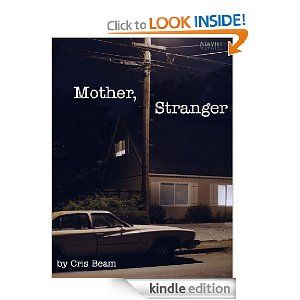
I just finished reading Cris Beam’s short memoir Mother/Stranger about growing up with a mother so mentally ill that she told her family that her daughter was dead, when, in fact, she had just moved away for her own safety.

Beam is a creative writing professor at Columbia University who also wrote Transparent, a nonfiction book that covers seven years in the lives of four transgender teenagers, which won the Lambda Literary Award in 2008.

Mother/Stranger is one of several very short memoirs I’ve recently downloaded as Kindle reader editions. These books can run from free to 99-cents and are often less than $10. There are a ton of new biographies and memoirs written by first effort authors who have struggled with toxic mothers.

One of my other favorites is by June Cross entitled Secret Daughter: A Mixed Race Daughter and the Mother who gave her away.  When her white aspiring actress mother has a love affair with a black comedian, she first intends to keep her baby – – if it can pass for white.

But this was the 1950’s and soon, June Cross is placed with a loving black couple living in Atlantic City. Her story of bouncing back and forth between the east coast where education and hard work are valued to summers in Hollywood where all that matters is the next fun party is fascinating particularly because she loves her mother and the “Aunt” who raised her, but struggles with literally being a secret.

Cross graduates from an Ivy League school and eventually becomes a producer for the television news show Frontline. It is in telling her own story of creating a documentary about her unique experiences that she shines.

I always say that you shouldn’t be afraid of your own story and that if you have to go out and interview relatives – do it! Cross shows us how to conduct an interview, when she finally asks her own mother all of the questions that have tortured her for her entire life. I was on the edge of my seat.

I asked for a Kindle reader this Christmas and received a Kindle Fire. Having had a library card since I was six-years-old and being the type of person who visits my local branch twice a week at least, I thought I’d mainly use it to download big, long, challenging reads. But what I’ve discovered is that e-publishing is making available so many little books written by real people and at such a low-cost, instantly via Amazon.com and other providers, that I’m reading like a maniac.

These earnest little books that can be read in one setting are often less than 100 pages and feel like meeting someone on a plane or a bus. We have a tendency to tell strangers so much more than we would ever tell our own social circle, don’t we?  These books feel like a whispered conversation. Almost like we’ve found an abandoned diary and are turning pages quickly for fear its owner will return and snatch it from our hands.

The other great thing about Kindle reading is that you can highlight lines and create a treasure trove of nuggets. I was highlighting a lot of Beam’s book Mother/Stranger. For example:

“I remembered the way my mother had told her family that I was dead and wondered if they ever believed it. I thought how strange it was to be a ghost: solid enough for everyone’s projections to land and stick but too ephemeral to fight back.”

Beam has great insights into what a child must suffer through having a mother with mental illness. She also reserves great sympathy for her mother.

“After therapy or years of a safe and protected life, a person can suddenly give language to what was once only a sensory terror. That’s what happened with my mom.”

She also has a great way of looking at the big picture, at one point writing that “estrangement runs in our family.”

Whether you use a library card, a laptop, or a Kindle reader be sure to explore these new memoirs that might help you to better understand your own experience. Check out the online book descriptions and be sure to skip down to the reader reviews that often refer to additional books.

Have you read a good memoir lately? Please tell us about it in the comments section below

Happy Reading!

Toxic Mom Toolkit: You Can Laugh or You Can Cry

24 Mar

As part of the Toxic Mom Toolkit Journal Project the next question is:

When you were little what did you think was the funniest thing? What made you laugh until your stomach hurt?

My dad, the beatnik printer, used to always say with a gleam in his eye,

“You can laugh or you can cry.”

When I would take a hard fall on skates and run to him weeping and showing off a fresh scrape he had this act, this routine, that would always leave me dissolved in giggles.

“You FELL? Where? Show me where you’re hurt!” he’d say breathlessly.

He’d scan my arms and legs with his huge hands, squeezing and waving my little limbs, asking me if this or that was broken; could I still feel it?  After he determined that I wasn’t actually broken he’d demand that I take him back outside to the sidewalk in front of our house and show him the precise, exact inch of sidewalk where I landed. He was worried that if I hit it that hard I might have left a crack and the Crack Police would come and write him a ticket – which cost money.

We’d get down on our hands and knees and touching the concrete with our fingers, feel around for fissures.

My dad would point to a little normal city street crack and demand to know if I had broken the sidewalk, right there.  Maybe we could ‘pin it’ on the little neighbor kid down the block.

“His dad’s a car mechanic. He can afford to pay the Crack Police fines. Not me! Not this week!” my dad would exclaim dramatically.

The routine went on and on until our giggles attracted a little knot of neighborhood kids to help us study the cracks in the sidewalk in front of our house. My father wasn’t worried about little hairline cracks, but big divots that collected dirt and allowed weeds to grow – that would be trouble.

My father had a knack for turning childhood upsets into funny adventures. When the gold fish died we held a New Orleans funeral for it, opening umbrellas in the house and parading down the hall behind him holding the fish bowl up high then pouring it dramatically into a flushing toilet. Then we’d all applaud poor dead Leon on his way to Ocean Heaven.

My dad and I wondered aloud what flowers said to each other and why birds liked to steal penny nails. We gave inanimate objects names in order to talk about them more. We talked and giggled and used our imaginations. Kids cry. But when my dad was involved, tears quickly turned into laughter.  We learned that bad things happen, but if you let the bad go, it’s natural to find something funny about it. Laughing is a choice, a habit. It’s a gift from my father for which I am eternally grateful.

When you were little what did you think was the funniest thing? What made you laugh until your stomach hurt?

Toxic Mom Toolkit Journal Project: Who Called the Police?

10 Mar

Most kids fantasize about the day someone finally punishes their parents for all the hurts, slights and times they had to eat their vegetables. But daughters of toxic moms can experience a life long struggle with the idea that perhaps someone should have called the authorities about a terrible home life, neglect or abuse.

So take a deep breath and transport yourself back to that time when your mom was at her worst. She is grabbing the wooden spoon and you are bracing yourself when – WAIT! There’s a sharp series of knocks at the door.

Imagine opening that door and seeing a special police force created solely to bust Toxic Moms. What would the police  say to your mom and what would she say back?

With your child’s eyes survey your childhood home. What would the police notice and question?  Would your mother confess or be defiant?  Would she try to escape? If she were arrested and led off in handcuffs what would be the last thing she would say to you as she was led away? What would you say back, knowing that the police would protect you?

This journal assignment is sort of like writing a small play. The great thing about creating a play is you can choose your characters, move them around and make them say or do anything you want. So what do you want to cover? What do you need to explore? What history needs to be rewritten by the adult you?

Don’t be afraid. It’s just pencil on paper you can erase or toss. But you just might discover that in reenacting and controlling the scene and dialog you are freeing yourself from old ghosts.  Or at least I hope so.

Toxic Mom Toolkit Journal Project

2 Mar

In honor of what would have been Dr. Seuss’s 108th birthday, today’s Toxic Mom Toolkit Journal Question is:

Q: At the very hardest time dealing with your toxic mom, what book saved you?

I think I became a writer simply because I loved to read. I developed a love of reading because I was alone much of the time, unsupervised. When I was small I used to carry very grown up leather bound books around to impress adults. I probably only impressed them as far too precocious. I spent many evenings on my tummy on the floor with my chin in my hands devouring the Wizard of Oz books, Heidi books and Betty & Veronica comic books.

Reading taught me that people’s lives are stories.

When I understood that, I started listening more closely, paying attention and taking mental notes.

I was the child who lived for eavesdropping. I became an adult apartment dweller who kept an empty water glass handy – just in case I heard neighbors fighting. I wanted to know why people did the things they did. I suspected that the way I was raised was not right and I relished observing others acting out their daily lives.

I wrote stories about the widow and the tomcat, my dashing motorcycle mechanic, the way people behaved under pressure or in the throes of love. I took writing classes and read like a convict on death row. I became a self taught writer and journalist.

I read adult books too early. I discovered children’s’ books too late. I have repeatedly been saved by the right book at the right time including, Gifts from the Sea by Anne Morrow Lindbergh and 52 McGs, a collection of the best obituaries from legendary New York Times writer Robert McG. Thomas, Jr.

Hands down the book that saved me more than once is To Kill a Mockingbird by Harper Lee. It showed me that the first job of a parent is to want what is best for their children. This is my favorite scene from the movie:

http://www.youtube.com/watch?v=q7CX_5D6y6E&feature=relmfu

Growing up with a toxic mom sometimes it’s hard to know what is normal, what is better, or what is worse. Biographies, memoirs and fiction focused on survivors have not only inspired me but also saved me from feeling too sorry for myself. They taught me that I could write my own life story.

What book saved you?

Toxic Mom Toolkit: Control Tools – What Did Your Mother Use? What Still Works?

11 Feb

As part of our ongoing journal project at Toxic Mom Toolkit on Facebook, here is our next question.

How did your mother control you when you were a child? What doesn’t work anymore? What still works?

Children look to their mothers for clues on how to behave. Daughters of Toxic Moms often get confusing or hurtful messages about how to behave at home or in public.

It doesn’t make sense to act one way at home – to be as quiet or invisible as a little mouse – and then be expected to smile and be talkative outside of the home. But that’s what many daughters of toxic moms had to deal with growing up.

Our mothers teach us to ignore bad behavior of adults, to lie and keep secrets and to pretend to others. It’s the reason so many of us face life-long impulses NOT to ask for help or support. Everything is always wonderful, so who needs help?

In the Toxic Mom Toolkit questionnaires I’ve grimaced reading the types of things some mothers do to control their little girls.  They can include constant demands for oaths of loyalty, sharing inappropriate adult information, lying, and pinky swears to keep awful things secrets. Rules of behavior are often enforced with delayed punishment, public embarrassment, pinches or slaps, neglect or physical abuse.

A mother’s eyes, a raised eyebrow, a curled lip, or a nervous laugh that telegraphs a threat can silence children.

What did your mother do to control you as a child? Does she still control you in these little ways? What doesn’t work any more? Why?

Toxic Mom Toolkit Journal Project: Question #5 – Riding Shotgun

3 Feb

As part of our ongoing journal project, here is our next question.

Question #5

You’re in the car with your mom and ahead of you is an all-day road trip. What would you like to tell your mom about during that long, long drive? What would you like to hear from your mom? What would you say if you knew it was the very last time you’d speak to her?

A big part of the frustration with having a toxic mom is always feeling verbally shut down. As we mature, we test the waters by asking questions or demanding answers with mixed results.

If you have a family history filled with secrets, no doubt you have many questions only parents or grandparents can answer. And it’s not enough to ask. A direct question can be deflected, ignored or twisted into an emotional bat, which will be promptly swung in your direction.

Is anything more slippery than a toxic mom?

Are toxic moms the ninjas of none’ya business?

But what if you knew you had six or more hours locked into a rental car with your mother? What if life forced you two into red Buick and set you on a flat dull road? What if you had ALL DAY to sort it out; to ask questions; to listen and take mental notes? What if you COULD call bulls–t on her?

What if you could do all that with the knowledge that it was the very last day you could ask any and all questions that weigh heavily on your heart?

What would you ask?

What would you finally tell her?

And when you arrived at your destination and parted company do you think you would feel sad or satisfied as she shrunk smaller and smaller in your rearview mirror?

Toxic Mom Toolkit: Who Stood Up For You?

28 Jan

As part of our ongoing journal project, here is our next question.

Question #4

Looking back at your childhood, who in your extended family could have helped you?

Why do you think they did or didn’t?

They say children survive abuse and neglect because they have no perspective.

If you were abused or neglected or treated badly as a child, certainly, some adult in your family circle — a neighbor, or a teacher — must have suspected.  So, why didn’t anyone call bull-dinky on your mother? Or call CPS?

My early childhood was fine, considering we were poor, my parents didn’t get along and we were nearly always unsupervised. But I don’t think that was much different for most kids in the ‘60’s.

I can think of a neighbor (several, actually), and a grandmother who indicated through their actions that they didn’t think my mother was taking care of me very well.

What did they do?

One neighbor included me in many activities with her kids and always invited me to their country cabin for the weekend, the site of many happy memories. Other block moms doled out Band-Aids and hugs.

My grandmother, my father’s mother, did a few things equal to pointing to her own eyes with two fingers and then turning your hand to point at someone else’s eyes — as if to communicate “I see what you’re doing.” My grandmother was no dummy. My grandmother knew my mother had bad tendencies. (My parents had lived with my grandparents when they were new marrieds.) My grandmother even went so far as to kidnap me one afternoon to see if anyone would notice. They didn’t.

Factoring in “the times,” I’m grateful that even a few people put themselves in uncomfortable situations with my mother with my welfare in mind. Could they have done more?

I don’t think so.  There was no family farm to send me to for a summer. No one  we knew “did” boarding school because no one could afford it. At that time you didn’t butt in. I think you just tried to be nice to the kid if you could.